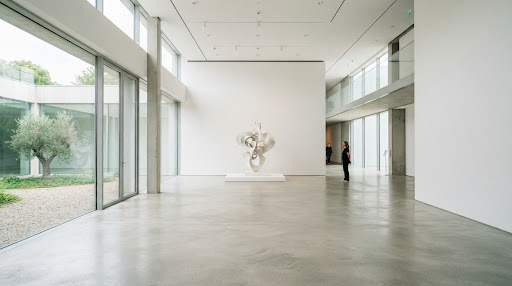
Acoustic design is the last discipline to be considered and the first thing occupants complain about. In a profession that evaluates itself through photographs, sound remains structurally undervalued—which is precisely why the buildings that take it seriously feel so unlike the rest.
The Photograph Problem
Architecture is disseminated visually. Awards are judged from images, clients are persuaded by renders, and no photograph has ever conveyed a reverberation time. The result is a systematic bias toward hard, reflective, photogenic surfaces.
Occupants experience the consequence immediately: rooms where conversation is impossible, corridors that amplify every footfall, atria that turn a building into a drum.
Nobody has ever walked into a room and admired the reverberation time. They just decide whether they want to stay.
— Acoustician, London
Designing the Threshold
The most effective acoustic interventions are spatial rather than material. A short, low-ceilinged transition between a loud street and a quiet interior does more than any absorptive panel, because it resets expectation as well as decibels.
This costs floor area, which is why it is usually value-engineered out, and why the buildings that retain it feel conspicuously calm.
Measuring What Matters
Standard acoustic metrics measure reverberation and transmission. Neither captures the quality occupants actually describe—whether a room feels enclosed, whether one can speak privately, whether the building sounds inhabited or dead.
Some practices have begun conducting post-occupancy sound walks with residents, generating description rather than data. It is unscientific and considerably more useful than the certificates.
Silence is expensive because it consumes area, mass and coordination—three things every budget attacks first. That it survives at all in a finished building is usually evidence that someone fought for it.