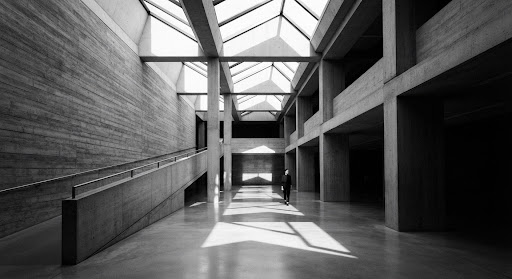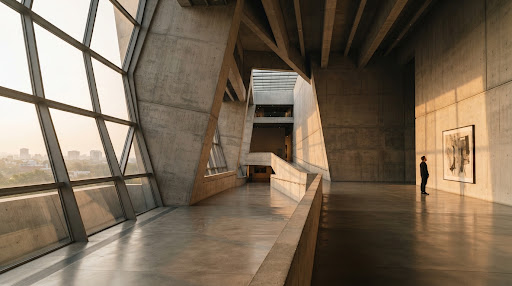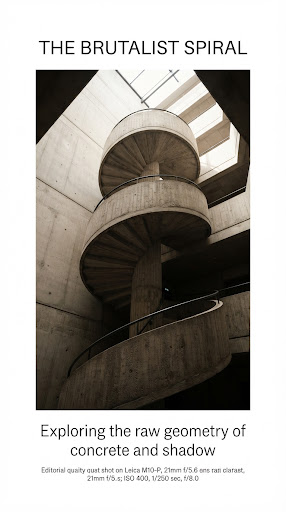
For thirty years the concrete buildings of post-independence Accra were an embarrassment to be demolished quietly. They are now being photographed, listed, and in a handful of cases restored. The reappraisal is overdue, incomplete, and complicated by the fact that many of them never worked very well.
Concrete as Independence
The buildings were not stylistic imports. Concrete was locally producible, required no imported steel frame, and could be executed by a workforce trained rapidly—a set of practical advantages that mattered enormously to states building ministries and universities at speed.
The aesthetic followed the logic. Deep overhangs and perforated screens were climate responses before they were compositional gestures, and the best examples still outperform their glazed replacements on cooling load by a wide margin.
It is easy to love a building you have never had to work in during the harmattan.
— Conservation architect, Accra
The Maintenance Reckoning
The revival’s honest difficulty is that concrete in a humid tropical climate is unforgiving of neglect. Reinforcement corrodes, spalling accelerates, and a decade of deferred maintenance can be effectively irreversible.
Restoration is therefore expensive in a way that photography is not. Several celebrated structures are admired at a distance while remaining structurally unresolved.
Whose Heritage
Listing these buildings raises an uncomfortable question about audience. The renewed interest has come substantially from abroad, and residents who used the buildings daily often remember them as hot, leaking and hostile.
The more careful preservation efforts have started from occupancy rather than image—asking what would make the building usable again, and accepting that the answer sometimes involves visible alteration.
The revival will be worth something if it produces repaired, occupied buildings rather than a catalogue. That requires money, patience, and a willingness to let these structures change—which is, after all, how they were built in the first place.