A. Cole works without a sketch. The garment is developed on the stand, in calico, by pinning and cutting until the cloth stops arguing. We spent an afternoon in the studio watching a jacket emerge from a single length of wool, and talking about why so few people still work this way.
Listening to the Cloth
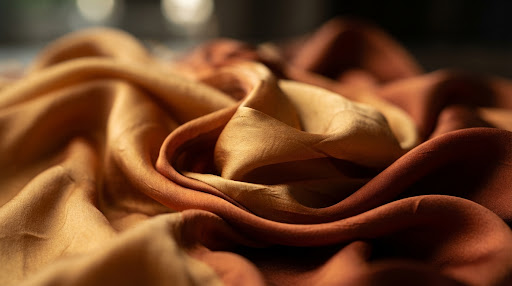
Draping is a conversation with material behaviour. A bias-cut crepe wants to fall; a heavy melton wants to hold. The designer’s job, as Cole describes it, is to notice what the cloth is already trying to do and then decide whether to permit it.
This is why the practice resists digitisation. Simulation has improved enormously, but it models an idealised textile. Real cloth has a memory of the bolt it came off.
The cloth tells you where the seam goes. You are only there to agree with it.
— A. Cole
Against the Block
Industrial pattern-cutting begins from a block—a standardised template adjusted outward. Draping begins from a body and a length of fabric. The results differ most visibly at the shoulder and through the back, where blocks tend to average away the specifics.
Cole is careful not to romanticise. Blocks make clothing affordable and repeatable, and draping every garment would price the work out of reach of nearly everyone. The argument is for draping the first one.
Teaching What Cannot Be Written
The transmission problem is acute. Draping is taught by standing beside someone and watching their hands, and the number of people qualified to teach it has thinned considerably in two decades of curriculum reform.
Cole now takes two apprentices at a time, which is fewer than the demand and more than the studio can comfortably afford. It is, by any commercial measure, a bad decision. It is also the only mechanism by which the knowledge continues.
What Cole is defending is not a style but a starting point—the proposition that a garment should begin from a body and a material rather than from a template, and that the difference is visible to anyone who has worn both.